A routine training exercise for Edmonton-based soldiers preparing to deploy overseas swiftly descended into chaos on a central Alberta military base — leaving four men dead, 19 others clinging to life and several more injured with severe burns.
“This was uncommon, rapid, and I certainly hadn’t seen anything like it,” Maj.-Gen. Wade Rutland, Commander of 1st Canadian Division, said during an update Sunday on the fatal fire at CFB Wainwright, located about 200 kilometres southeast of Edmonton.
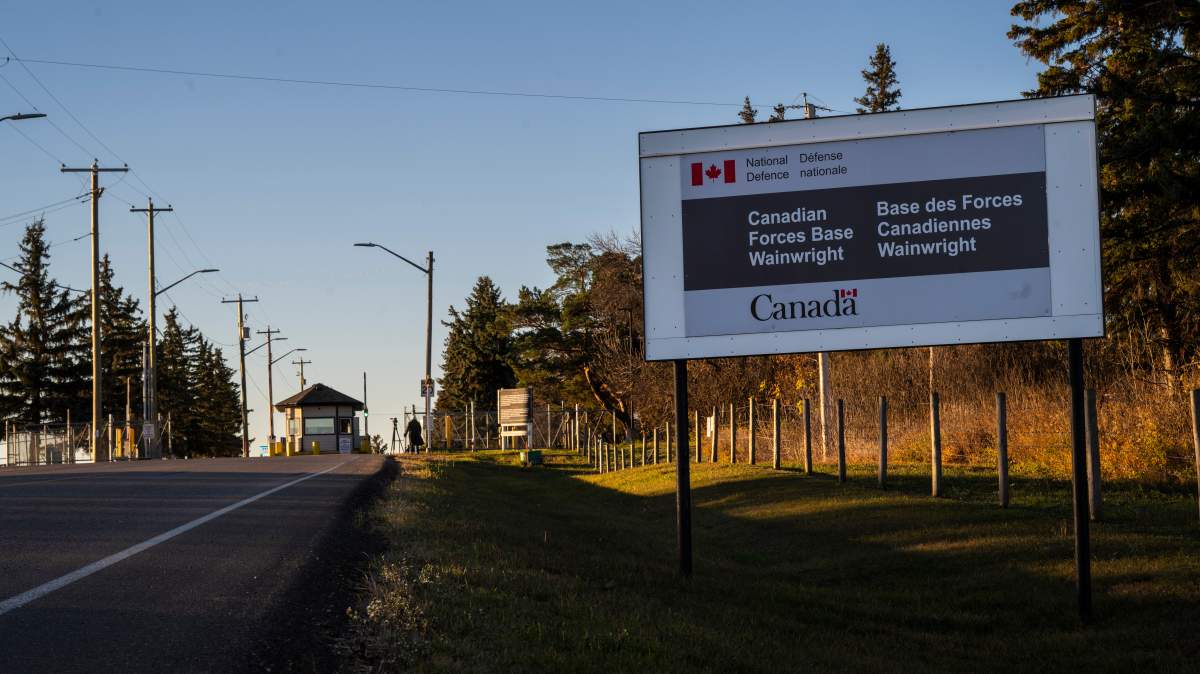
The town of Wainwright following multiple deaths after a fire at CFB Wainwright Alta., on Sunday, Oct. 18, 2026.
John Ulan/ The Canadian PressAbout 350 troops with the 3rd Battalion, Princess Patricia’s Canadian Infantry (3PPCLI) were participating in exercises at CFB Wainwright — one of Canada’s busiest military training bases, used mainly to train soldiers and prepare units for combat operations — when disaster struck.
“I spoke to my commander on the ground,” Rutland said.
“They saw no fire and then, there was a fire right on top of them.”
On Saturday, savage winds had been racing through the province, toppling trees, knocking out power, slamming signs, and sending garbage cans and other debris skittering down alleys and roads.
Environment Canada wind warnings advised gusts up to 100 km/h were expected in the afternoon.
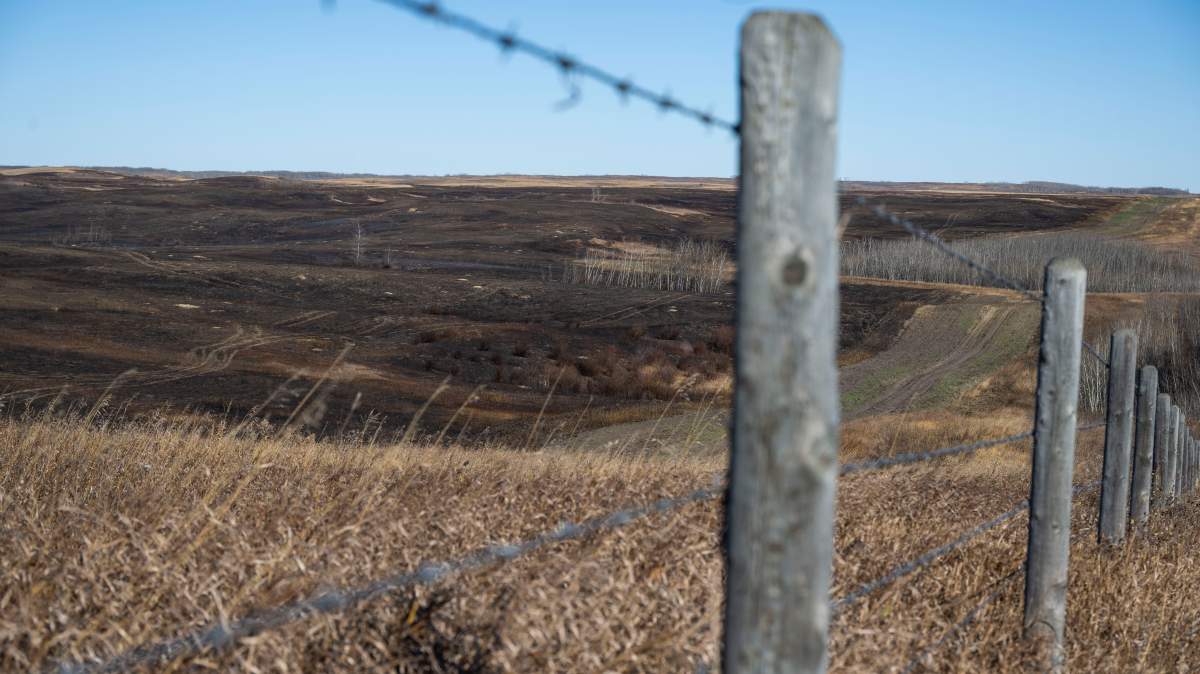
The burn area on CFB Wainwright south of the town Wainwright Alta., on Sunday, Oct. 18, 2026. Four people have been killed and numerous others injured.
John Ulan/ The Canadian PressRutland said a nearby grass fire was known well beforehand but not considered a threat.
“We train in all types of conditions, because you don’t know where you’re going to operate,” he said.
The training exercises in Wainwright served two purposes, Rutland said.
“To become what’s called our ‘global response task force,’ ready to move within hours (to) any hotspot around the world — preparatory training. Also, they were preparing to go to Latvia in April and May to bolster our brigade.”
“So this was high-intensity combat training with live munitions.”
The flames were about a kilometre away and considered sufficiently under control that training exercises were allowed to take place nearby on Saturday afternoon.
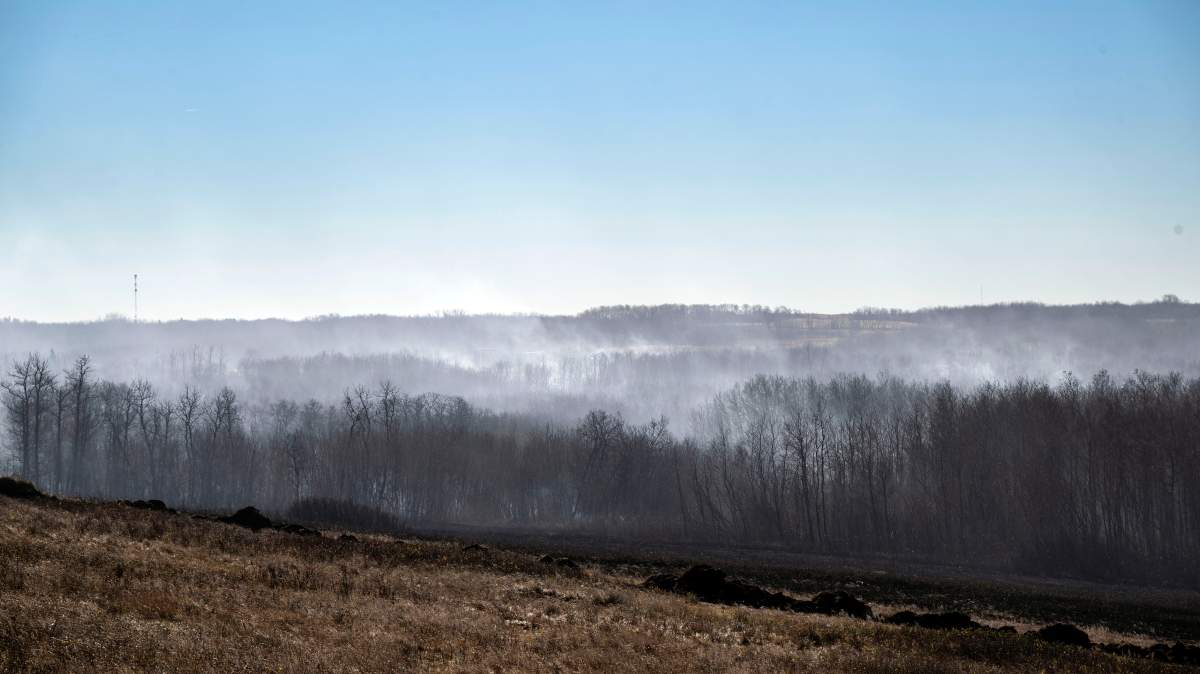
The burn area on CFB Wainwright south of the town Wainwright Alta., on Sunday, Oct. 18, 2026. Four people have been killed and numerous others injured.
John Ulan/ The Canadian PressRutland said the affected unit was Charlie Company of the 3rd Battalion of the Princess Patricia’s Canadian Light Infantry.
He said when the fire hit, the 84-member company was doing two exercises. Most were throwing hand grenades on a range while 10 soldiers were doing a simulated attack on an enemy, when they found themselves suddenly caught in the path of the roaring fire.
A violent, sudden surge of wind sent the flames racing over the Prairie landscape at lightning speed, landing right on top of the soldiers, Rutland said.
“The fire was a kilometre away when the wind shifted. It is not normal for a fire to move a kilometre in 30-to-60 seconds.”
After overwhelming the soldiers, the blaze then jumped the base fence and threatened nearby rural areas and the town of Wainwright.
Four soldiers from CFB Edmonton killed
The four soldiers killed have been identified as: Sgt. Morgan Wong, Pte. Shaun Farrell, Pte. Aida Goulding and Pte. Hayden Lykkemark.
Wong was from Edmonton and a member of the Loyal Edmonton Regiment. The other three were all members of 3PPCLI and while based at the Edmonton Garrison, hailed from either side of Alberta: Farrell called Prince Albert, Sask. home while Goulding hailed from North Vancouver and Lykkemark from Langley in B.C.’s Lower Mainland.
The fire sent 39 other troops to hospital, 19 of whom on Sunday afternoon were in critical condition.
“The loss of life and injuries are heartbreaking,” Alberta Premier Danielle Smith said when she announced the casualty count and confirmed many have serious burns.
“For those patients and their families, this is far from over. We know that the road ahead, especially for those who are suffering from severe burn injuries, will be long — requiring weeks and months of intensive and specialized care.”
The wounded are being cared for in four hospitals: the University of Alberta and Royal Alexandra in Edmonton, Foothills in Calgary and the regional hospital in Red Deer.
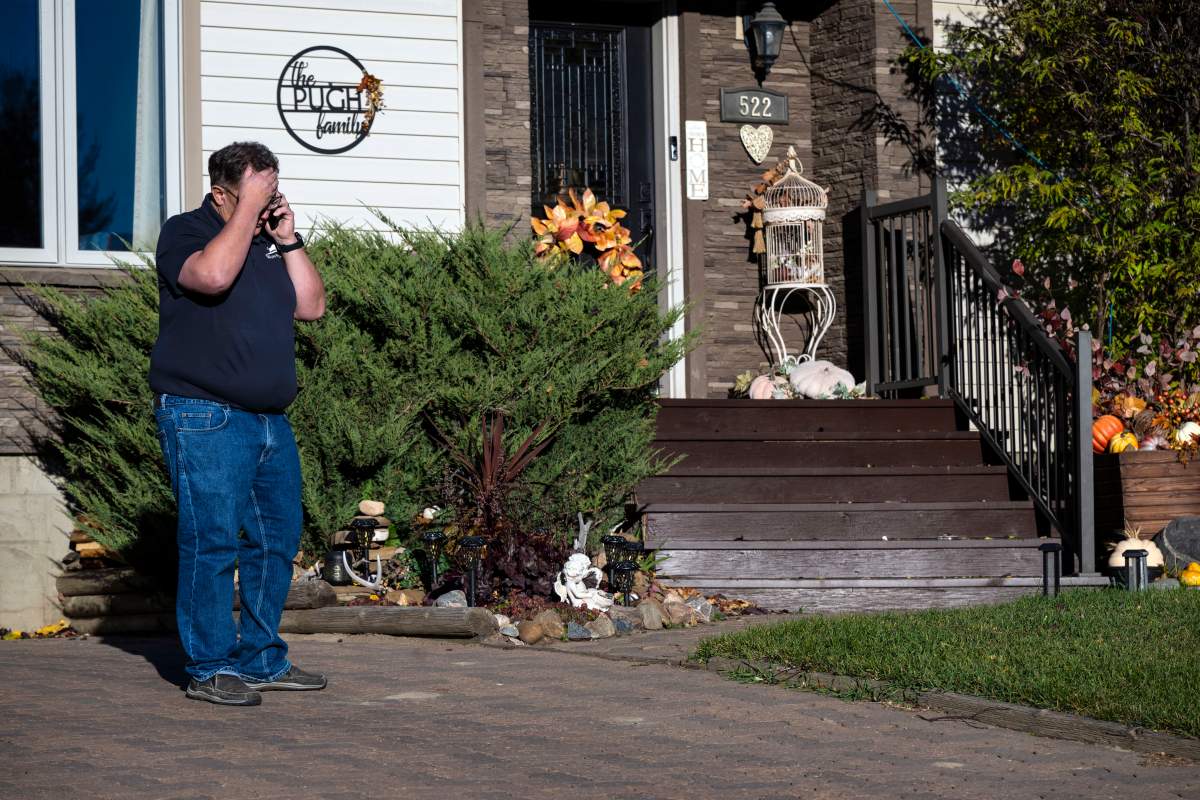
Bruce Pugh the mayor of Wainwright Alta., talks on the phone at his home on Sunday, Oct.18, 2026.
John Ulan/ The Canadian PressBruce Pugh, Wainwright’s mayor, said he regularly hears the booming sound of artillery and cannons being launched during training from the base, so he didn’t think much when his windows rattled Saturday afternoon.
“But what was different was that everything went silent after the rattle,” Pugh said in an interview at his home, about five kilometres from the base.
“After that, we have friends who are physicians, nurses, (who) were hearing through personal channels that everybody was being called to help with a mass casualty event.”
Moments later, he recounted, came the sound of sirens and helicopters.
Emergency resources from across Alberta and beyond sprang into action Saturday evening.
“When crisis hit, Alberta’s front-line heroes did not hesitate for a single second,” Smith said.
The premier said 30 emergency units, including 22 ground ambulances and eight medevac aircraft, were deployed directly into Wainwright.
The Saskatchewan government also sent a medevac plane to ferry the wounded from Wainwright to Edmonton.
Bright flares lit up the night sky over Wainwright as Royal Canadian Air Force search and rescue technicians leapt from military aircraft and parachuted into the community.
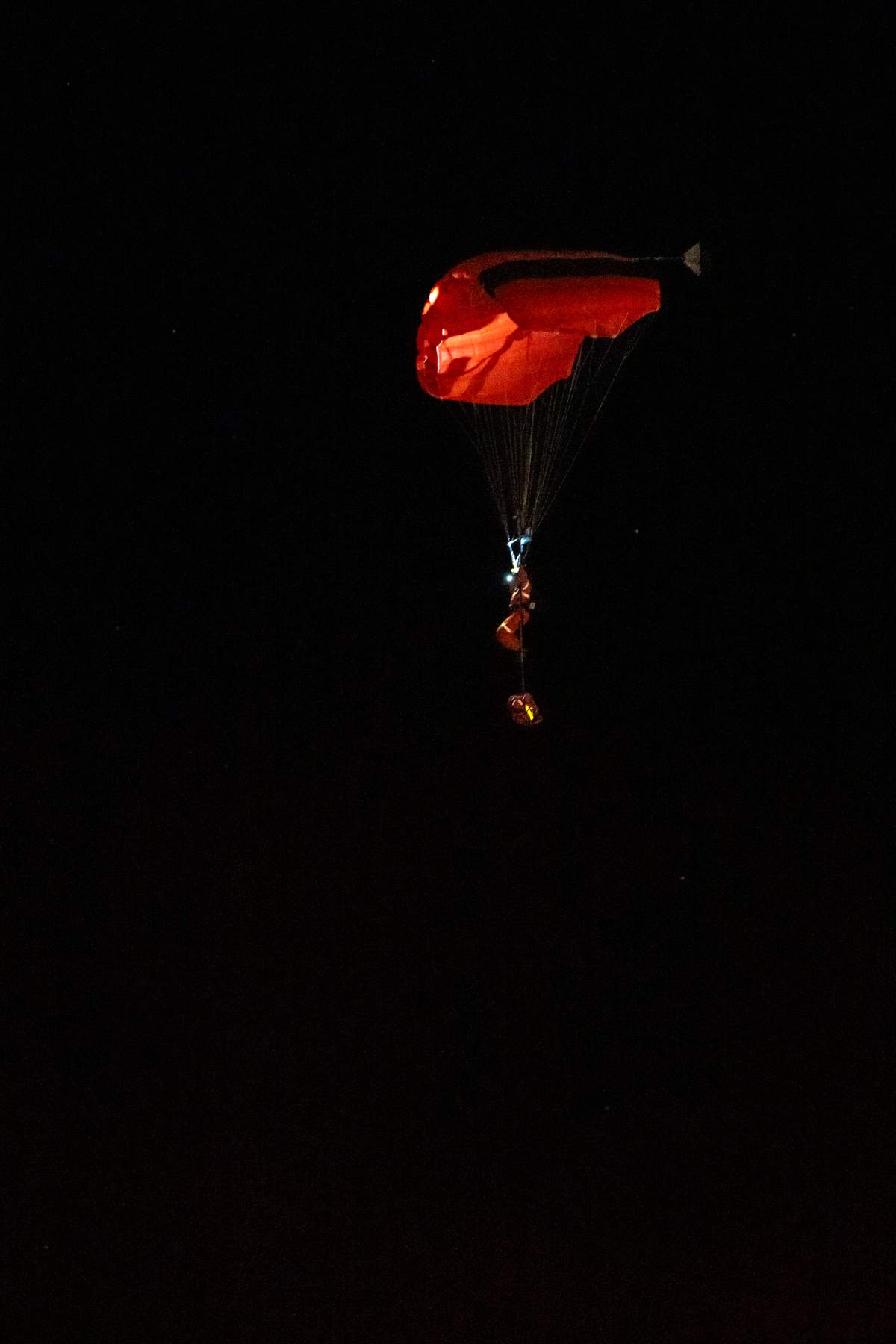
A person parachutes near the Wainwright Health Centre as injured military members are treated after a fire at CFB Wainwright, outside of Wainwright, Alta., on Saturday, Oct. 17, 2026.
John Ulan/ The Canadian PressRutland said the paratroopers were deployed as part of the overall response to get more capacity on the ground quickly.
“They’re stationed all across the country. They’re highly skilled, highly trained. They jump onto Arctic ice flows and they can certainly jump into Wainwright.”
Several hospitals declared a Code Orange, triggered when a mass casualty incident or external disaster has occurred and many injured patients are expected to arrive all at once.
“We are deeply grateful to the first responders, paramedics, physicians, nurses, and hospital teams across Alberta who have mobilized to provide care to those injured,” Smith said.
“Albertans should all be incredibly proud of their frontline health-care workers and our acute care system that has managed this mass casualty event.
“Under immense pressure and in the face of deep heartbreak, they delivered rapid life-saving care and made sure that at no time was our emergency health system overwhelmed.”
What sparked the fire is not yet known; Rutland said there were many things happening on the field that afternoon.
“There was a multitude of ordinances moving through the Wainwright training area yesterday: grenade launcher, grenades, small arms, ammunition.
“Quite frankly, it could have been any of that or none of it.”
An investigation is now underway and Rutland said there is a lot to consider: Did the fire move that quickly because of the wind? Or did it move unseen through foliage to surprise the soldiers? Or was it both?
“This is why we’re going to do a complete investigation as to the topography, field conditions, foliage, etc., because it all plays into what happened,” he said.
There are oil and gas operations and infrastructure on several of Alberta’s vast military bases. While multiple military sources on Saturday night told Global News the live-fire training exercise was believed to have hit a gas line or gas well on the base, causing an explosion, Rutland said he didn’t believe that was the case.
“When this happens, we send the team in to look at the oil and gas infrastructure, to make sure it’s not damaged. Initial impression is it’s not, but we will definitely check.”
Rutland spoke at a news conference with Smith and Defence Minister David McGuinty.
McGuinty said those affected were soldiers and reservists from across the country.
“This loss reaches communities in every province,” he said.
Where is CFB Wainwright and what surrounds it?
CFB Wainwright is considered one of the CAF’s busiest bases and is used to train Canada’s military and prepare units for combat operations.
It’s considered, according to retired Maj.-Gen. David Fraser, “as real as it can be” in preparing soldiers for combat operations.
The base is home to the Canadian Manoeuvre Training Centre, the 3rd Canadian Division Training Centre, and approximately 12 lodger units.
Fraser told The Canadian Press training at the base involves more than just weapons training, with exercises covering everything in the CAF’s arsenal from firearms and aircraft to artillery and armoured vehicles.
Exercises are organized and methodical and Fraser says something went wrong at CFB Wainwright, adding those who undergo this training are well-versed in safety procedures. Safety staff also oversee every exercise.
The safety manual is “quite large,” Rutland confirmed.
“It’s the military, which is a government organization, so we have a protocol for everything,” he said.
According to the Government of Canada, more than 200 active gas wells and associated pipelines can be found in the CFB Wainwright area.
The area is also known for livestock grazing and recreational hunting, which has been allowed for more than four decades at the base.
The base is about 609 square-kilometres in size and located about 205 kilometres southeast of Edmonton and found within one kilometre of the town of Wainwright.
Is this the CAF’s most tragic training incident?
Earlier Sunday in Ottawa, Prime Minister Mark Carney called the Wainwright disaster one of the “worst tragedies for the (Armed Forces) on Canadian soil in peacetime.”
Prior to Saturday’s explosion and fire, the Canadian Armed Forces had seen other deadly domestic events.
The most recent occurred in July, when a three-person rope team was performing a rescue exercise at the time of the incident.
The three members fell into a crevasse in Jasper National Park, dropping about 20 metres. The three were responsive and stable and flown to hospital after being rescued.
One of the deadliest training exercises that happened on Canadian soil was in 1988 at CFB Chilliwack.
Students were practicing explosive cratering in the demolition phase of their military engineer officer training when a charge detonated prematurely during a session.
According to the Canadian Military Engineers Association, 29 students and seven instructors were in attendance. Six students were killed and several others were injured.
A coroner’s inquest and board of inquiry concluded the a hotspot developed inside the camouflet tube, triggered by friction and heat generated when the tamping rod was used with excessive force.
The hotspot likely ignited a blockage, causing a small detonation that then triggered the main charge. The incident was ruled as accidental.
There has also been a previous incident in the last decade at CFB Wainwright, when Sgt. Robert Dynerowicz died during a training exercise in 2017.
He was commanding a light-armoured vehicle when a collision occurred. Three others were injured.
With files from Jack Farrell, The Canadian Press and Ashleigh Stewart, Sean Previl and Jeff Semple, Global News
© 2026 Global News, a division of Corus Entertainment Inc.









 Ad Choices