- To read more about what may have caused the failed execution, click here
Christa Pike, the Tennessee death row inmate who last week survived two rounds of a lethal injection, is conscious and speaking, her lawyers said, the same day a judge ordered materials from the failed procedure be preserved.
In a court hearing Wednesday, Tennessee Judge I’Ashea L. Myles said the state must save evidence from the botched operation.
“That would include waste, all packing, labels, inserts, anything in regards to the actual drug that was used needs to be maintained and preserved, as well as any supplies that would have come from whatever manufacturer administering those products,” she said.
“All photographs, video recordings, audio recordings, any surveillance footage of the execution will need to be maintained; anything going on in the witness rooms, recording rooms, any recording of that evening, September 30th, will need to be preserved and maintained,” Myles continued.
She also ordered everything that was in the execution chamber, handwritten notes, logs, checklists, timelines, encrypted messages and emails belonging to indivuduals assinged to the execution from the date of execution be preserved.

Chancellor I'Ashea L. Myles presides over a hearing requesting the Tennessee Department of Corrections to preserve all evidence related to the failed execution of Christa Pike, Wednesday, Oct. 7, 2026, in Nashville, Tenn.
AP Photo/George Walker IV, PoolOne of Pike’s lawyers, Randy Spivey, said following the court hearing that Pike “ is very aware of what they did to her up to a point.”
“On Monday night, it was our understanding that Christa was brain dead and that life support would be removed the next day,” Spivey said. “But on Tuesday, to the shock of everyone … Christa woke up and began talking.”
Spivey, who was not with Pike when she woke up, said he was told her first words were, “Where am I?” and “Who are you?”
She is unable to move her arms or swallow, her lawyers added.
The 50-year-old’s prognosis remains unclear and, at a minimum, she faces a lengthy recovery, her lawyers added, noting that her arms were burned and blistered from at least seven IV needles used during the execution attempt.
She is shackled to her hospital bed, they said.
In court Wednesday, one of her lawyers, Luke Ihnen, said Pike is currently unable to contact her legal team and requested the court grant her phone access from the hospital. Medical staff have also requested that her shackles be removed.
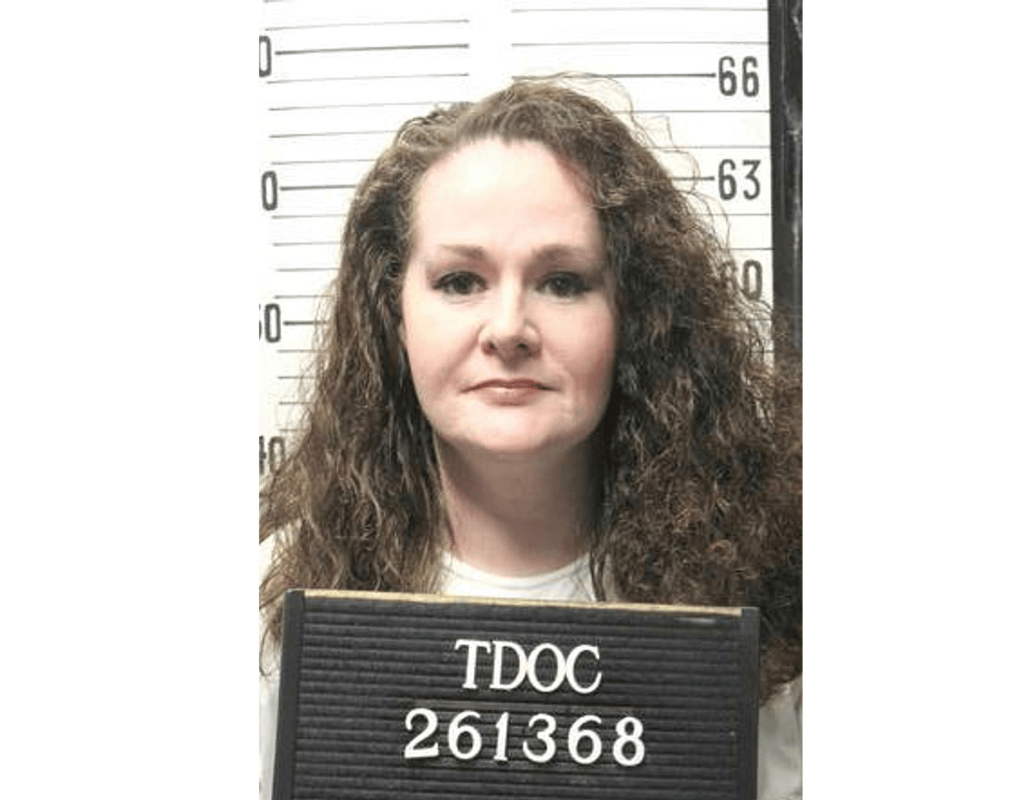
This photo, provided by the Tennessee Department of Correction, shows Christa Pike on Jan. 12, 2023.
TDOC via APThe Death Penalty Information Center says Pike is the only person to survive after receiving lethal injection drugs during an execution.
Lawyers for Pike also said Wednesday that the state has made no promises that she “will not be subject to future execution” and that “the evidence they were seeking to preserve now is relevant for any future challenge that she makes.”
Tennessee Governor Bill Lee announced last week that he had ordered “a comprehensive, third-party review to determine exactly what occurred” and that a remaining state execution scheduled for this year will not take place.
Medical and lethal injection experts have theorized about the possibility that a faulty IV line caused the drug —pentobarbital— to disseminate in her tissue rather than enter her bloodstream.
Pike’s lawyers wrote in a court filing last week that “apparently at no point did any member of the execution team realize that the IV lines were not correctly placed or that the veins had blown.”
They also referred to prior difficulties with blood draws and needle insertions, as well as concerns expressed by Pike nine months ago, where she warned that her individual physical characteristics, including thrombocytosis, post-traumatic stress disorder, and small veins, “make it sure or very likely that there is a substantial risk that she will experience unnecessary and superadded pain and suffering, terror, and disgrace,” suggesting that her execution would result in “cruel and unusual punishment in violation of the Tennessee and United States Constitutions.”
Pike had argued that the execution protocols were unconstitutional because they did not account for the provision of medical care, or the resuscitation of a prisoner in the event of a failed execution.
Her concerns were “laughed off, scoffed at, and dismissed,” the court filing says.
The update on her health comes a week after it was reported that the execution had failed and that she could be heard wailing and complaining of pain and pressure in her arm by witnesses to the procedure.
After receiving the drugs, she was taken by ambulance to a Tennessee hospital.
Pike was sentenced to death for a murder she committed at 18 and would have been the first woman to be executed in Tennessee in 200 years.
A Tennessee appeals court initially halted the lethal injection an hour before it was scheduled to begin on Sept. 30; later in the day, the U.S. Supreme Court overturned that stay, permitting the execution to go ahead.
— with files from the Associated Press
© 2026 Global News, a division of Corus Entertainment Inc.












 Ad Choices